
From Pitch to Pour to Purchase | We Help Beverage Brands Land in Bars, Restaurants & Retail | Distributor + Customer Strategy + Field Activation | Just…
June14, 2026
A screenwriter, a grandmother's recipe, and the slow, expensive, deeply human work of getting a can onto the shelf.
Most founder stories get told like this:
Great idea. Big launch. Hockey-stick growth. Exit.
Clean. Fast. Fundable.
Marcel Dios told us the real version.
Came from film and music. Found out his wife was pregnant the same season his industry fell apart. Leaned into the fear and started a beverage brand.
Six accounts. Thirteen Bristol Farms doors. A demo team. And a $500K hole he has to climb out of before the buyers forget his name.
That part never makes the pitch deck.
🎙️ This Week on Drink Up
Two days in a row at Drink Up, so Adam called it: it's drinks week.
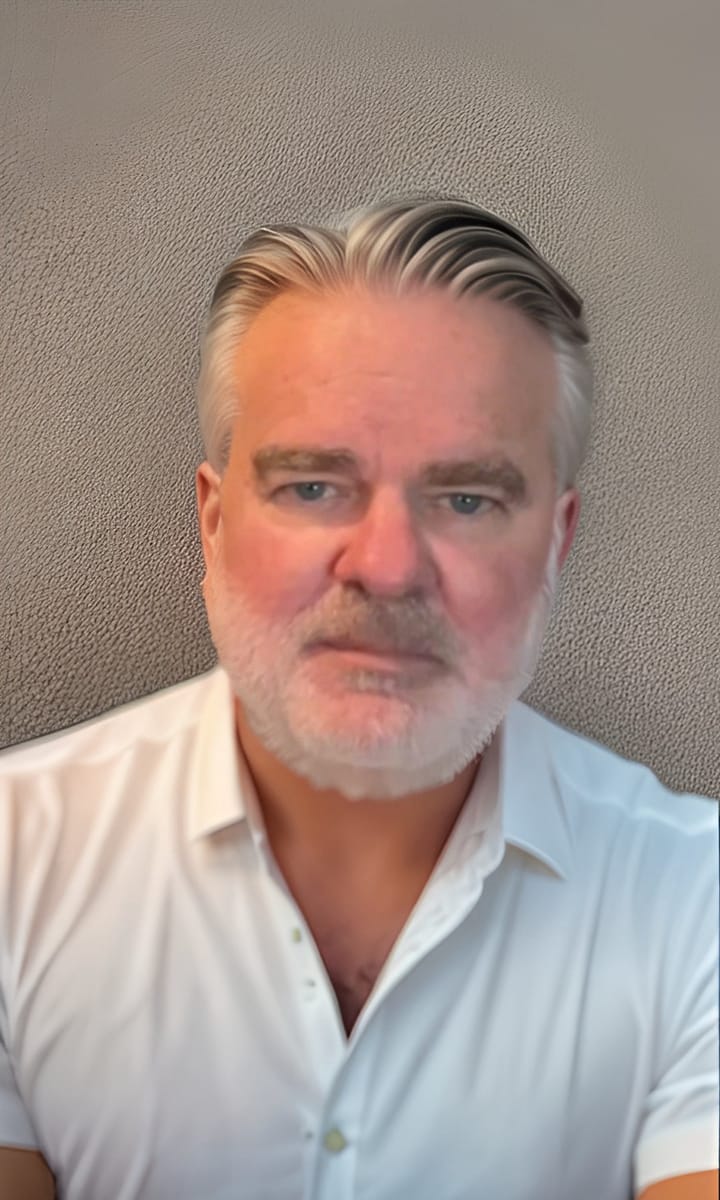
Our guest is Marcel Dios, founder of Kulli (he just renamed it from Purple Up), a non-carbonated functional drink built on chicha morada, the Peruvian purple corn elixir his mom and grandmother made his whole life.
He did not come from beverage. He came from the arts.
“I come from the entertainment side. I was a music composer for many years and then I pivoted to being a screenwriter.”
The WGA strikes hit. A few things fell apart. He found out a baby was coming. And instead of running for cover, he ran at the thing that scared him.
“I kind of just leaned into the fear of it all, the not knowing what was going to happen to my stability.”
🧪 What Is Kulli, Actually
Chicha morada translates loosely to a brew or an elixir. Morada means purple. The hero ingredient is maiz morado, Peruvian purple corn.
And the color is not a gimmick. It is the whole point.
“In that purpleness is where all the antioxidants live.”
Anthocyanins, the same antioxidant family in blueberries. Naturally vibrant, no artificial dye, and a story most of the shelf cannot tell.
Marcel did not soften the differentiator, he leaned on it:
“I didn't see anything that resembled chicha morada.”
Industry context: better-for-you and functional beverages are where the growth is hiding while soda flattens, and natural color is a category tailwind right now (more on that when Adam jumps in). A heritage ingredient nobody else has locked up is exactly the kind of moat investors pay for.
🛒 Liquid On Lips
Kulli is heading into Bristol Farms on an innovative end cap. New drinks get a window to prove themselves.
The window:
90 days.
The footprint:
13 doors.
I asked the only question that matters once you get the yes: how do you drive velocity and reorders? His answer was not a media plan.
“Demos, put as many liquid on lips as possible.”
He has already demoed roughly a thousand people. He hired a demo team. The plan is 13 demos a week, one per door, every weekend.
“That's the trick. That's the name of the game.”
He even iced down a cooler and handed out cans across the street from a farmers market, then pointed people to the store right there.
Sam's take: that is the golden goose, and most founders skip it. They want to hire a head of sales before they have personally put the can in a hundred hands. You are still the best demo your brand has. One can in a hand is ten people hearing about you, because they tell their friends. Do not outsource that until you literally cannot be in the room.
🤝 It Is A People Business
Ask Marcel how he stands out in an ocean of five or six beverage aisles and he does not say packaging or paid media. He says relationships.
“It is a people business.”
He walks his accounts. He merchandises his own shelf. He brings the store team a case.
“And I'll bring them a case. Hey guys, here's a case for you.”
Sam's take: AI is not calling the buyer to reorder you. A human is. The founders who win the early innings are the ones who treat the store manager like a partner, not a purchase order. Boring, unscalable, and the entire game at this stage.
Industry context: Jim Koch built Boston Beer the same way, around 30 accounts in year one with the product in the trunk of his car, selling Samuel Adams bar by bar. Forty years later the move has not changed. Trunk, handshake, taste, repeat.
⚙️ The Stuff Nobody Romanticizes
Adam went where Adam goes: operations.
Co-packers, formulation, MOQs, the daily grind of getting a produce-based drink into a can. Marcel was honest about the pecking order.
“The co-packers don't really care about the little guys.”
Then the line that quietly kills early brands, the MOQ math:
“The less you buy, the more expensive it is.”
Small runs mean high COGS. High COGS means burning cash before scale ever shows up.
“We're burning cash right now.”
He also gave credit where it was due. Leisure Hydration's Alex and Stephen helped him find his formulator, and that formulator held his hand through the supply chain. The community showed up.
🧪 Adam On Natural Color And The Greenwashing Tax
This is where having an operator co-host earns its keep.
Adam said: organic certification is not free credibility. The logo alone costs a few thousand dollars, then come the audit certs and the higher material costs, and the amount of greenwashing in food right now is, in his words, insane. Not organic-is-bad, just know what you are paying for.
Then the part every formulator should screenshot:
“That industry is on fire right now because everybody's transitioning from artificial colors.”
Adam said: as brands rip out synthetic dyes, demand for natural color sources is spiking, and the crop yields that make those colors are under real stress. So Kulli's purple is not just a marketing asset. It is a naturally colored ingredient in a market that is suddenly desperate for exactly that.
Industry context: the FDA's move against synthetic dyes (Red No. 3 revoked in early 2025, with more on the way) is pushing the whole industry toward natural color at once. When everyone reformulates in the same quarter, the supply of natural pigment gets tight and expensive. Marcel happens to own a hero ingredient that is purple by nature.
🔒 Lock The Moat Upstream
Here is the smartest thing Marcel has done, in his own words.
He buys his purple corn from a Peruvian farm, and he got the supplier to ink exclusivity on this format.
“This is probably the most important thing I've done.”
His ceiling is bigger, too:
“Eventually we'll buy a farm down in Peru.”
Sam's take: if your differentiator lives in one ingredient, the negotiation that matters is not with your co-packer or your distributor. It is upstream, with the supplier. Lock exclusivity early, before retail scale gives you leverage you no longer have, and document it so it survives the day your contact leaves. Most founders sweat the can and hand away the corn.
🔥 The 50% Discount He Walked Away From
Before the Peru deal, a supplier in Poland offered him purple corn that traveled internationally twice to reach him. A Bermuda triangle of a supply chain.
The price was the kind that makes founders stop thinking.
50% cheaper than what he pays now.
“It was like a 50% decrease of what I'm paying for purple corn now.”
He said no. He took the straight shot from Peru and paid the premium for a supply chain he could trust.
Hot take: if a deal is so good it makes you want to skip your own diligence, that is the deal most likely to blow up your brand. Cheap corn that has to clear two oceans and a customs roulette is not a savings, it is a single point of failure with a discount sticker on it. The cheapest input in the world is worthless the month it does not arrive.
Sam's take: this is what saying no actually looks like. Not a philosophy slide. A real number on a real invoice that you turn down because the risk is wrong. Slow down to speed up. One of the best pieces of advice I ever got, from a psychologist in a Miller interview years ago, was exactly that.
🛑 The Mistake: He Gave Away Too Much
Asked what he would undo, Marcel did not dodge.
He shared too much with an LA consulting firm before doing his homework. He got excited, felt the connection, skipped his usual reconnaissance. Then his CPG community warned him: stay away from those guys. Copyright infringement, taking other people's ideas and repackaging them.
He even asked them to sign an NDA.
“They very much said no.”
He has watched founders from that same firm get wiped out:
“Washed out financially, completely obliterated.”
Sam's take: you did not protect your moat. It happens, and it is survivable, but let it be the cheapest tuition you ever pay. If a partner who wants your secrets will not sign an NDA, that is not a vibe to push through. That is the answer. Do the background checks before the meeting, not after.
💸 The Catch-22 Canyon
Marcel has a name for where he is, and it is the best phrase from the whole episode.
“We're at the Catch-22 Canyon, as they call it.”
It is the dip after proof of concept, where you need scale to attract capital and capital to fund scale. The number to climb out:
$300K to $500K.
“This is the area where you need another three to five hundred thousand dollars to prove that you can actually scale.”
He is raising a seed round now. And he is clear-eyed about the clock. Get approved by a big retailer, fail to fill the demand, and the buyer moves on without blinking.
“Yeah, purple corn, exciting. We haven't heard from Marcel and company. Okay, let's go to protein water.”
Sam's take: momentum is a perishable asset. A retail yes you cannot fulfill is worse than a no, because it burns the relationship and the shelf. Aim for a 95% fill rate or do not take the door. I have watched brands say yes into 38 states and die because they could not ship. Runway, roughly two to three years, is not a vanity metric here. It is whether you survive the canyon.
🧗 The Hardest Yes: Farm Shop, Brentwood
I wanted the no count, because nobody talks about the no count.
Farm Shop in Brentwood was his white whale. Wealthy zip code, premium shelf, exactly the consumer Kulli wants.
He got a maybe. Then a no from someone above. Then the person who said no quit. He kept finessing it, and he already knew the staff because he ate breakfast there as a customer.
Two and a half to three no's.
Two months.
Then the yes.
👉 The account you most want is usually the one that makes you ask more than once.
🎯 The One Idea You Should Steal
Marcel's mentor, Brad Mindich, gave him the line he runs his company by:
“You have to be comfortable being the stupidest man in the room.”
Comfortable is the keyword. Because the founder who can sit in not-knowing keeps learning, and the one who fakes it stops.
On the difference between success and failure, he was just as clean:
“There's always something to learn from your failure that will take you to your next success.”
👀 What This Means For You
If you are building a beverage brand right now, steal Marcel's playbook, not his vibe:
Lock your hero ingredient upstream before you scale, in writing.
Put liquid on lips yourself until you physically cannot.
Say no to the discount, the door, or the partner that does not fit, even when it is tempting.
Watch your fill rate like it is oxygen.
Adam said it best on the way out, on Marcel being honest about the hard numbers, the $500K raise, the 50% savings he turned down:
“That's real shit that brand owners think, it'll be fine. That's a difficult hurdle to overcome.”
💬 Final Thought
Marcel put his exit in the universe on the record, the keys-to-the-Lamborghini kind. We will hold him to it.
But the line that will actually get him there is quieter:
“As long as you're having fun.”
A screenwriter who got told no by his old industry is now getting told yes, one Brentwood breakfast at a time. That is the job. Slow down to speed up, keep the corn close, and keep putting cans in hands.
🔗 Sources & Further Reading
🧃 Your Move
Building a brand right now?
Don't chase the cheapest input.
Don't chase every door.
Don't chase the discount that skips your diligence.
👉 Chase the moat, the velocity, and the fill rate.
The rest follows.
Truthfully,
Sam


