
From Pitch to Pour to Purchase | We Help Beverage Brands Land in Bars, Restaurants & Retail | Distributor + Customer Strategy + Field Activation
May 16, 2026
What a 16-year industry vet at Red Boot Beverage wants every founder to know before they sign their first co-pack contract.
Most pitch decks for a new beverage brand look like this:
Cash out the 401K → develop a great-tasting formula → find a co-packer → ride into the sunset.
Clean. Believable. Sexy.
Reality?
You're going to need every dollar you have — and probably another zero on top of it.
You're going to need a real sales team your distributor is not going to be.
You're going to need to treat all 50 states like 50 separate businesses.
And if you can't do all three, you're not in the 20% of new brands that survive.
🎙️ This Week on Drink Up
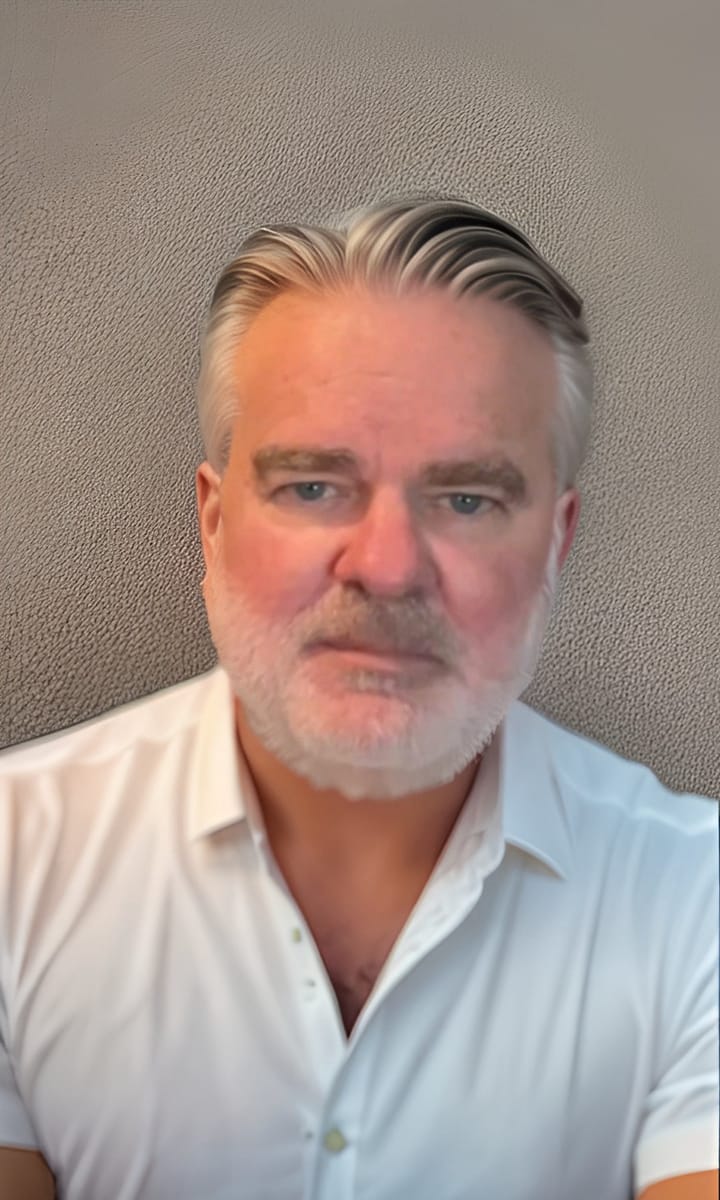
Chris Slanga — VP of Revenue at Red Boot Beverage, a co-packer based in Des Moines, Iowa.
16 years in beverage. Started hanging neons in bars for a Miller distributor in Minnesota. Went through a Red Bull house, then Premium Waters (12 plants — the biggest private-label bottled water company you've never heard of), then four years at BevSource.
Now he's leading revenue at Red Boot as it scales from a 40-can-per-minute line to a 1,000-can-per-minute line.
He's seen this brand journey from every angle — distributor, manufacturer, co-packer, brand owner.
👉 And he came on the show ready to torch a few of the myths founders bring to their first co-pack call.
🛑 The Setup — "How Hard Could It Be?"
Most founders walk into the beverage industry assuming the recipe is the hardest part.
Develop a great-tasting liquid. Find a co-packer. Hand it to a distributor. Cash flow at scale.
Chris's bluntest reality check came in under two minutes:
“It's not for the faint of heart. It's certainly not a get-rich-quick scheme. You've got maybe a 20% chance of survival.”
That's a survival rate worse than a new restaurant.
💸 The $200K Trap
This was the moment of the episode.
Sam asked Chris what it actually takes to get started.
“If you're cashing out your 401K that has $200,000 in it, don't get into the beverage industry. You're doomed.”
Sam had Chris repeat it twice — for every listener with that exact number on their personal balance sheet.
Then Chris pushed it further:
“Even with another zero at the end of it, you're still maybe not quite raising enough capital.”
Cogs's running tally from the same call lines up exactly:
👉 Half a million just to enter the race.
👉 Another $1M–$2M to properly execute.
Where most founders blow it: they price the formula and the first production run, then forget about LTL freight (Chris called it "a killer of any CPG business — not just beverage"), slotting fees, demo budgets, broker commissions, pallet drops, and a direct sales force the distributor will never replace.
Sam's take: if you're sitting on $200K and you want into this industry, go work for a brand first. Learn it on someone else's dime. You'll still come out ahead.
🧪 What a Co-Packer Actually Does (And What You Have to Bring)
Chris took his sales hat off for a minute and walked through manufacturing from the production-floor side:
“You can get a formula that tastes incredible. You can put it in a can or a bottle or whatever you're dreaming of. That's the easy part. The hard part is what we don't do — the marketing and the sales aspect.”
Red Boot's setup is a useful tour through the capability questions every founder should be asking before the first call:
👉 A 150-can-per-minute line for smaller runs (just installed, replacing the 40-cpm line).
👉 A 300-can-per-minute line with a rotary filler and tunnel pasteurizer.
👉 A 1,000-can-per-minute line landing in Q2 2026.
👉 A new variety pack machine — the fulfillment retailers like Sam's Club actually want to see.
What Red Boot does NOT do: aseptic packaging, retort, distilling.
And yet — Chris gets ~10 inquiries a day from founders pitching products he publicly doesn't make. Including, on this episode, the example of a referral from another consultant asking about Tetra Pak for a brand whose founder didn't yet know the pH of her own product.
👉 If you can't answer "what is the pH of my product," you are not ready to be on a co-packer call.
🛒 Distributors Are Not Your Sales Team
Sam told a story from a client meeting that week — the founder had vented that his distributor "had done nothing for him."
Sam's response, channeled through 20 years of doing this:
“They take the product, they warehouse it, they deliver it, their reps initiate orders. You're not unique — you worked the market, you opened the doors. That's the toll you have to pay to get over the bridge.”
Chris's amen:
“You really need to grind. The product doesn't sell itself. Once you get a distributor, that's not the end of the line.”
👉 Distribution ≠ sales coverage.
👉 365 days post-signature with no field activation? You're on the dead-and-slow-moving inventory list.
👉 And from there, you're 90 days from discontinuation.
🧭 Treat Every State Like a New Business
This was Chris's framework moment.
Sam told the Nico Copa story live on air — a tequila RTD founder at 150 of 1,000 possible accounts in his home Jersey market, who was already flying to Florida to expand.
Adam Corner, founder of Carbless (the $70M brand Sam keeps holding up as a model), looked him in the eye and asked the obvious: why are you here, when you haven't closed your own backyard?
Chris's expansion of the principle:
“You almost need to treat every state like its own new business. If you measure success by collecting states as a merit badge, you're going to have a tough time.”
The math is brutal once you spread out:
👉 30K–50K cases of total production divided across 40 states = 40 separate marketing spends.
👉 40 separate distributor management problems.
👉 40 separate freight lanes — and freight kills CPG margins faster than anything else on the P&L.
👉 Zero density to defend any one shelf when a competitor walks in behind you.
Sam's take: an inch wide and a mile deep beats a mile wide and an inch deep every time. Carbless did it. Tito's did it (20+ years, bankrupt twice). Celsius did it (founded 2004 — almost a quarter-century to overnight success). The brands you think exploded mostly didn't.
🔄 The Bee Squeeze Story — Live On Air
Halfway through the episode, the small-industry magic of beverage hit on a live LinkedIn stream.
Cogs asked about Red Boot's brand portfolio. Chris held up a 12 oz can: Bee Squeeze.
Cogs lit up — he'd brought a pallet of Bee Squeeze (then in glass) into Toronto two years ago. He knew the founders, Eli and Bea Brody, out of Grosse Pointe Farms, Michigan.
The backstory:
👉 Real estate family. Made a lemonade to pass out at a development site launch.
👉 People loved it. They bottled it.
👉 Built it into Sam's Club Texas. Then Carmel, La Perry, and the regional Midwest.
👉 Earlier this year, Eli sold the brand to Stuart Oxer at Red Boot.
👉 Eli stayed on as a strategic operations advisor — daily conversations with Chris.
That is a five-year build, sold to your manufacturer, with an active advisory seat post-exit.
👉 That is the realistic exit story for a regional brand done well.
👉 Not Poppi-money. Not unicorn-headline-money. But a legitimate, life-changing outcome.
Industry context: most exits in beverage that actually close are exactly this size and shape. The Poppi / Olipop trajectory is a marketing-engineered outlier (Poppi has reportedly been burning ~$1M/month on advertising), not the median. Don't price your cap table off it.
⚙️ Find a Co-Packer Who Can Grow With You
A throwaway line from Chris that operators should tattoo somewhere visible:
“Find someone that can grow with you. Sometimes they can't. You might have to move on.”
Same rule for distributors:
“If you start with one and they're not working out, move to another.”
👉 Loyalty without scrutiny is one of the most expensive habits in CPG.
👉 If your co-packer is at capacity, your launch is at capacity.
👉 If your distributor isn't picking up the phone, you don't have distribution — you have a warehouse storage agreement.
🎯 The One Idea You Should Steal From This
Chris dropped a line that should be the closing slide of every pitch deck in this industry:
“Some of my best referral sources are other co-packers. It's so vital for all of us to stay connected — even if we're competing against one another — because there's always something that you do that they don't, or vice versa.”
That's the actual playing field.
Adam's version, on the way out the door:
“You're going to see the same 100 people over and over again, and then you'll meet another 10, and then it'll be the same 110.”
👉 If you operate like a transaction-by-transaction zero-sum player, the network closes around you.
👉 If you operate like a karma-economy contributor, the same network throws referrals, capacity, and exits at you.
Cogs's mid-show story made the point in real time — a sparkling water founder named Juliana went from 5 to 7 Toronto stores and an early Pacific Candy order in 48 hours, just because the right two people picked up the phone for her.
👉 Small wins matter as much as the Walmart announcements.
👉 And they compound through the same 110 people.
🧭 What This Means For You
If you're building or thinking about building a beverage brand right now, here's the working list straight off this episode:
1. Pressure-test your funding. If you don't have $1M–$2M committed (yours, investors, or both), don't start. Find a brand to learn inside of first.
2. Know your formula before you shop for a co-packer. Know your pH. Know your shelf-stability strategy. Know your packaging spec.
3. Do your homework on capabilities. Match the co-packer's actual capability list to your spec before the first call.
4. Treat every state like a new business. Pick one. Win it. Then pick the next one.
5. Work the market your distributor signed you for. The toll for the bridge is your own legs on the floor — every week, for years.
6. Be a good citizen of the 110-person industry. The people in it remember who refers and who hoards.
💬 Final Thought
We always close with the same question for every guest: what's the difference between success and failure?
Chris's answer wasn't about exits or unit economics. It was the most disarming we've gotten this season:
“If I'm remembered by people in this industry — friends — as somebody who's a good guy that does the right thing, that was upfront and honest… that's success to me.”
Sam translated it live on air:
👉 Live the dash. The dash between the year you're born and the year you die is the only metric that matters.
Cogs's closing — told through the story of getting Juliana's brand from 5 to 7 stores — said the rest:
“Being associated with you makes me look better. I am doing this for both of us.”
That is the entire beverage industry, in two sentences.
🔗 Sources & Further Reading
🧃 Your Move
If you're building a beverage brand right now:
Don't cash out your 401K.
Don't sign a distributor without a plan for the next 365 days of fieldwork.
Don't treat 40 states like a single launch.
👉 Build the regional brand. Win the home market. Earn the right to expand.
That's the whole playbook.
Truthfully,
Sam


