
From Pitch to Pour to Purchase | We Help Beverage Brands Land in Bars, Restaurants & Retail | Distributor + Customer Strategy + Field Activation
May 22, 2026
What a firefighter and his wife learned building the only wine-inspired THC can on the shelf.
Most beverage founder stories start the same way:
A big-money raise → a polished team → a slick launch → distribution from day one.
This one starts differently.
A firefighter who got approved for THC gummies to sleep.
A wife who is, in her own words, "a wine kind of girl."
A Google search.
And a 24-hour Penske truck ride from Cincinnati to Austin with 20,000 cans rattling in the back.
This is the version of the journey that nobody puts on Instagram.
🎙️ This Week on Drink Up
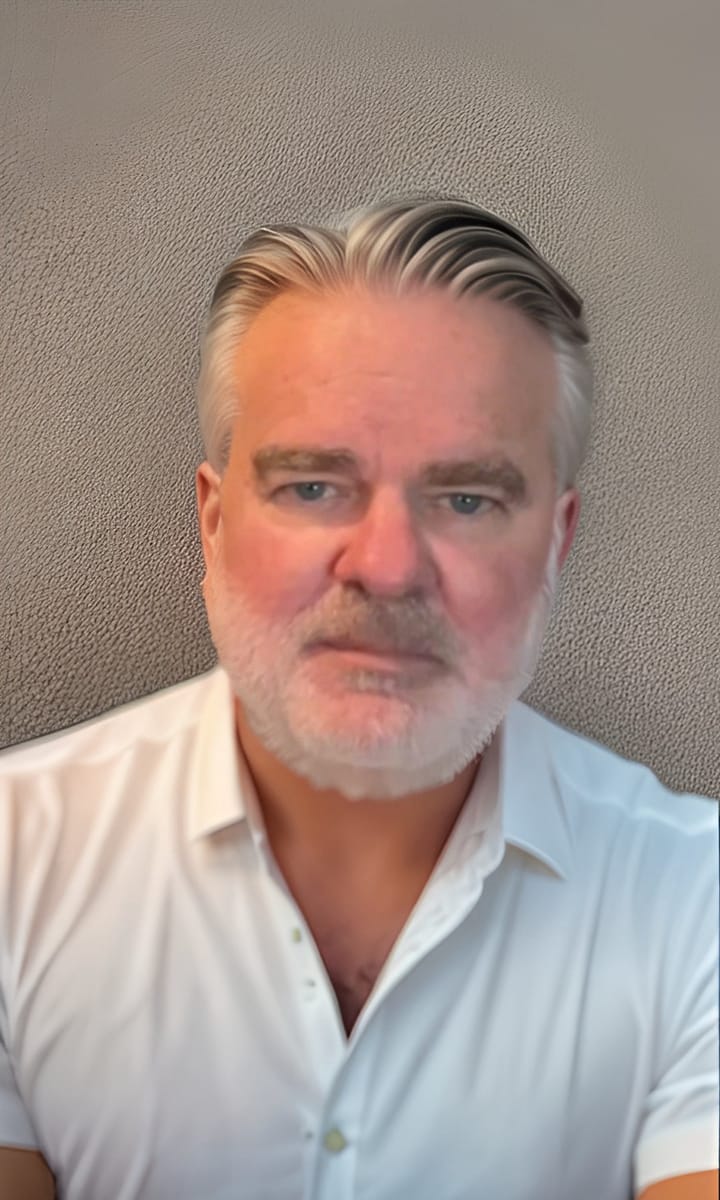
Alex and Morgan — married couple based in Austin, Texas. Co-founders of Delta Vine, a hemp/THC-infused, wine-inspired beverage.
Alex is a firefighter. Morgan works in tech.
Neither of them had any background in business, beverages, or formulation when they started.
What they had was a gap in the market: every hemp beverage on the shelf was a seltzer at 10mg. Nothing positioned for the wine drinker. Nothing at a session dose.
👉 So they built it themselves. From a Google search up.
💡 The Hole in the Market
Morgan walked through the moment of the founding:
“I'm a wine kind of girl. Everything out there right now, they're all seltzers and they're all 10 milligrams. I'm not a gummy or a smoker or anything.”
She Googled "wine-based hemp product."
She couldn't find a single one.
👉 The most defensible position in CPG isn't a new ingredient — it's a new occasion.
👉 The wine drinker who wants to relax without alcohol is a massive, underserved consumer.
👉 And the customer who's actually buying their product on the back end? 60+. Not the Gen Z crowd they expected.
🧪 What Formulation Actually Costs
Sam pushed on the number every founder asks but nobody wants to publish:
“We were on the lower end. The actual formulation process was right around $20,000. It's not nothing — but it's less than a car.”
That tracks with what Adam quoted from a recent r/beverageindustry post — another first-time founder had landed in the same range.
👉 Real, defensible formulation for a multi-SKU functional beverage = $20K–$30K minimum.
👉 Anyone quoting under $5K is doing it as a loss leader with a hidden hook elsewhere — ingredient lock-in or production scoping.
👉 Anyone quoting $50K+ for a standard wine-inspired SKU is overcharging or solving a problem you don't have.
Delta Vine's path: Power Brands in LA (shout out to Saul Hirshhorn) → flew out to meet the food scientist → iterated through samples → walked away with a commercial formula they own.
Sam's frame: lot of founders show up at our desk with $50K saved and no idea what the rest of the credits roll costs. $20K well-spent on formulation is a win. $50K total budget to launch a beverage brand is not.
🚚 The 20,000-Can Penske Truck
This was the moment of the episode.
After Power Brands handed over the commercial formula, Alex did what every first-time founder does — opened the supplier list and started emailing.
“I put everyone on a group email and tried to blind-carbon-copy everyone. Didn't work out very well. Apologies to everybody.”
Ironheart connected them to Braxton Brewing in Northern Kentucky for the first production run. 1,000 gallons per SKU. Two SKUs: red and white.
Then came the part nobody puts on a pitch deck:
“We drove it down from Cincinnati to Austin, put it in the back of a Penske truck and drove it down. Terrible idea. 24 straight hours in the car. The pallet fell over. Nightmare.”
Founder math nobody teaches:
👉 You spend $20K on formulation.
👉 You spend more on production.
👉 You walk out with 20,000 cans and no warehouse, no distributor, no plan.
👉 You move them yourself, one truck at a time, until you figure out the next step.
👉 "We're not driving it back ourselves" was the lesson going into run two.
💸 Why the Second Production Run Got Smarter
First run with Braxton: 1,000-gallon-per-SKU MOQ. Long logistics chain from Cincinnati to Austin. Expensive lessons.
Second run with MetaBrand in Edison, NJ: lower MOQs, lower complexity, shorter cycle time, no LTL nightmare.
Adam's frame on the trade-off every founder mishandles:
“A gentleman in New York told me he's going to make two truckloads of product. I really recommend you don't. I'm aware of the cost inversion between volume and per-unit price, but cash flow is a very real thing. You're going to tie up a shitload of money making that much product.”
👉 Take the lower MOQ — even if per-unit cost is worse — until you have 6+ months of sales data.
👉 Cash flow beats per-unit cost optimization in year one.
👉 Volume drops the per-can price. Volume also drops your runway if your velocity is wrong.
🛑 The Texas Regulatory Knife
Halfway through the conversation, Delta Vine's biggest external threat hit the table.
Earlier this year, Texas tried to outlaw all hemp products. The bill got to the governor's desk. Greg Abbott vetoed it and said the state would regulate the category instead.
The proposed compromise:
👉 Retail license: $20K–$25K per year (it was a couple hundred dollars).
👉 Distributor license: also $20K+ per year.
Alex's blunt summary:
“It would basically kill most of the industry except for the big players.”
Distributors that were ready to sign Delta Vine paused. They're waiting for the final rules before committing.
Industry context: this is the regulatory pattern playing out in every hemp-friendly state. The compromise — "we'll regulate it instead of banning it" — looks like a win on paper but functions as a moat for incumbents and an exit for everyone smaller.
👉 If you're building in a regulated or pre-regulated category, build the DTC channel as a parallel survival mechanism BEFORE the regulatory hammer drops.
👉 Delta Vine had to. So will everyone else in this space.
🏪 The $5 Single-Can Trial
Delta Vine's DTC playbook is the kind of detail every emerging brand should take notes on:
“We offer a single can on our website for $5 if someone wants to. It's a low buy-in so they don't have to commit to a four-pack or a 12-pack.”
Adam confirmed live on air, looking at the website: "Right there. Five bucks."
The math:
👉 Five-ounce glass of wine at a restaurant: $8–$12.
👉 Twelve-ounce can of Delta Vine, delivered to your door, at 2.5mg THC: $5.
👉 More volume. Adjacent occasion. New experience.
👉 The lowest possible barrier to first trial.
This works because Delta Vine can't do traditional in-store sampling at scale. Their alternative is putting the friction on themselves — $5 ships at-cost-or-loss, and the customer self-onboards.
🧭 Velocity, Reorder Rate, Conversion — The Numbers Distributors Actually Want
Sam pulled the conversation into the data work that separates surviving brands from dying ones:
“Take your DTC data. How many customers do you have? What percentage are reordering? Look at your velocity. Then your brick-and-mortar in Texas — those are established customers. Look at what they're ordering on a weekly and monthly basis.”
When you walk into a distributor meeting, this is the diligence package:
👉 How many consumers are you touching.
👉 What's your reorder rate.
👉 What's your velocity per account.
👉 Where are your repeat customers concentrated.
Sam's anecdote from the field made the point:
A distillery client claimed they were "in 400 accounts in Colorado." When Sam pulled their sales data by account, by month: less than 25% had reordered. The rest were one-time placements headed for the dead-and-slow list.
👉 If you can't pull these numbers, you read as a brand that doesn't know its own performance.
👉 If you can, you've already won half the meeting.
🎯 The One Idea You Should Steal
Alex's working definition of success is the line of the episode:
“Every day we wake up and we say we either have two choices: we either solve whatever problem is in front of us, or we quit. Those are the two options.”
“If you think something's perfect, something's wrong. You just don't know it yet.”
👉 That's not motivation. That's an operating model.
👉 Every successful CPG brand is a daily decision to keep moving, not a quarterly strategy review.
👉 The brands that fail aren't the ones with the worst products. They're the ones that run out of "solve it" gas before year three.
⏱️ Sam's Spicy Take — Plan to Lose Money for 3–5 Years
Sam dropped it deliberately, mid-conversation, in the way only 20+ years in distribution can:
“You should be prepared to lose money for three to five years with your product and be competitive.”
“You're at $19.99 because your can costs $2.75. Not because your ingredients are extraordinary. That's just the math.”
The brands that survive build the runway for the math, not the dream:
👉 Tito's: 20+ years and two bankruptcies before becoming the spirit story we mythologize.
👉 Celsius: founded 2004 — almost a quarter-century to a $20B market cap.
👉 Most brands die because they ran out of money before the unit economics had time to fix themselves.
🧬 Brand Personality as Strategy
Live in the comments, Alicia called out the part of Delta Vine that's actually doing the marketing heavy-lifting:
The website's drink pairings.
“Pairs well with a Housewives rerun.”
That kind of casual, occasion-based copy isn't comedy. It's positioning:
👉 The soccer mom who just watched 20 youth soccer matches and got home — that's the occasion.
👉 The lifestyle pairing tells her what to do with the product without saying "you're a soccer mom."
👉 Delta Vine isn't selling THC. It's selling "the version of relaxing that doesn't require a hangover."
Sam's add: occasion-based marketing is what wins in adult beverage. People aren't drinking less — they're rotating occasions. Win one occasion clearly, and you have a brand.
🧭 What This Means For You
If you're building a beverage brand right now, here's the working list off this episode:
1. Find the hole in the OCCASION, not the ingredient. Delta Vine isn't a new molecule — it's a new context for an old one.
2. Budget $20K–$30K for proper formulation. Less is a red flag. More is a different red flag.
3. Take the lower MOQ on your first production run. Cash flow beats per-unit cost optimization in year one.
4. Build the DTC channel before you need it. Regulation, distributor pauses, broker turnover — DTC is your survival mechanism.
5. Make trial dirt cheap. Delta Vine's $5 single-can ship is best-in-class for a regulated category that can't sample in-store.
6. Pull your reorder rate. If you don't know it, you don't know your business.
7. Plan to lose money for 3–5 years. The brands that don't, don't survive.
💬 Final Thought
We always close with the same question: what's the difference between success and failure?
Alex's answer was the most useful definition we've heard this season:
“You either solve whatever problem is in front of you, or you quit. Those are the two options. If there's a way forward, just figure out how to do it. If you need money, there's a way to find money. There's a way to find an investor, find a lender.”
And Morgan's version of what actually keeps them going:
“In the end, we get customers who come back and they give us praises — how much they love it, how much they sleep. When we drink Delta Vine, we're like, this is good. People just need to try it. We're not failing because of the product. So we just need to figure it out every day.”
👉 Resilience isn't a personality trait. It's a daily operating choice.
👉 The product has to be good enough that you'd drink it on the days nothing else is working.
👉 If both of those are true, you have a brand.
🔗 Sources & Further Reading
🧃 Your Move
If you're building a beverage brand right now:
Don't make two truckloads on the first run.
Don't outsource your reorder rate.
Don't wait for distribution to start direct-to-consumer.
👉 Find your one occasion. Win it. Then earn the next one.
👉 Make trial dirt cheap. Make reorder effortless.
👉 And every morning, pick "solve it" instead of "quit."
That's the whole playbook.
Truthfully,
Sam


