
From Pitch to Pour to Purchase | We Help Beverage Brands Land in Bars, Restaurants & Retail | Distributor + Customer Strategy + Field Activation | Just Pick Up the Phone
June 27, 2026
Forty-two years in wine and spirits, and the single hardest truth most brands still refuse to accept.
CLICK HERE TO WATCH
Most founders think the win is getting picked up by a distributor.
Sign the deal. Get on the truck. Job done.
Ben Salisbury has spent 42 years in this business, and he'll tell you that belief is killing brands.
Distribution does not equal demand.
Getting into more doors does not create more sales.
The burden shifted, and most suppliers never got the memo.
This one is a master class. Take notes.
🎙️ This Week on Drink Up
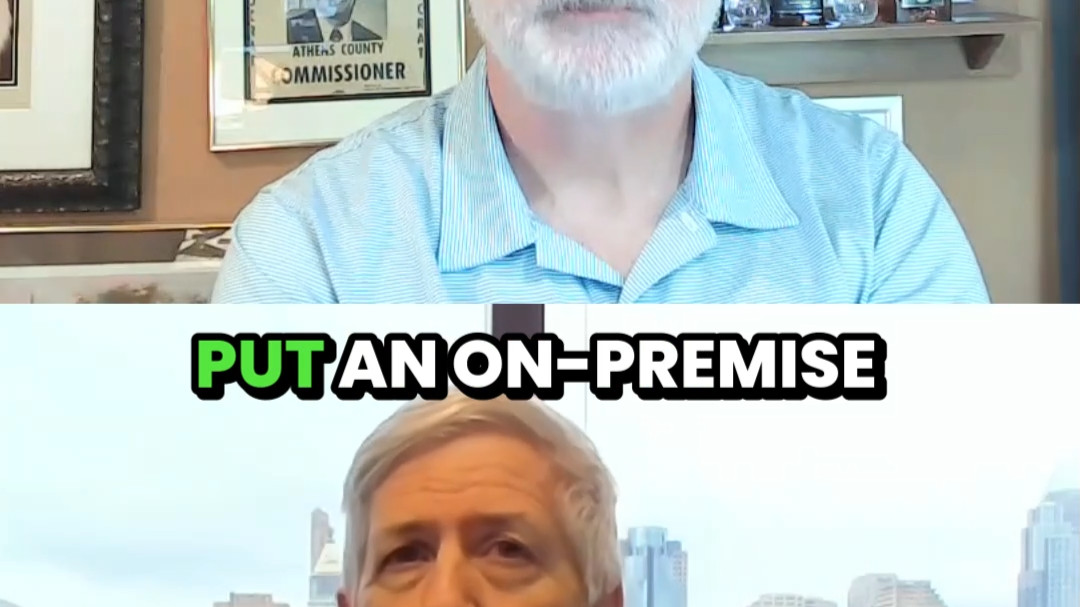
We sat down with Ben Salisbury, a 42-year wine and spirits veteran and founder of Wine Sales Stimulator.
He started carrying the bag for Gallo in 1983, became one of the first dedicated on-premise chain reps in the country, ran on-premise chains as a VP at Ste. Michelle Wine Estates for 12 years, then joined Constellation Brands.
A tranche of Constellation stock options at a $15.35 strike price eventually let him do the thing he'd always dreamed about: hang his own shingle and consult.
Now he gives most of it away. Hundreds of free articles, videos, and guides, plus a new book. As he put it, he just turned 66, and he wants the work to mean something.
📈 175,000 Wine Brands and a Shrinking Pool of Distributors
Sam asked the big question. What actually changed between 1983 and now?
Ben's answer was simple, and most people miss it.
175,000 wine brands for sale in the US.
That's the number the CEO of Kendall-Jackson once put on it, and Ben believes it. In the 80s you could name the players on one hand. Gallo, Almaden, Inglenook, Taylor, a little Carlo Rossi with Franzia in between.
Now there are more brands than anyone can count, and the distributor pool has shrunk dramatically at the same time. Small, medium, or large, you are in a very crowded book.
“They're still running plays out of a playbook that was built for another time.”
Sam's take: I started with Gallo in 1983, and I still have my Gallo sales book, my field marketing book, and my sales manager book. There are great plays in there. But not every play from 1983 wins in 2026. The operators who keep losing are the ones running a forty-year-old playbook against a market that rewrote the rules underneath them.
🧠 The Sale Happens in the Customer's World
Here's the line that should reset how you sell:
“The sale happens in the customer's world, not the salesperson's world.”
The old playbook was product-first. Walk in, recite the features and benefits, hand over the Nielsen data the buyer couldn't get anywhere else. That worked when you controlled the information.
You don't anymore. Any buyer is a few clicks from anything they want to know. So leading with your product, your story, your vision, your awards, is leading with the wrong hero.
Ben pointed straight at Donald Miller's Building a StoryBrand. Make the customer the hero of every post, every pitch, every page. Most wine and spirits brands never do.
Industry context: it's a $14 book, and Ben has a stack of receipts to back the principle. Pair it with Daniel Pink's To Sell Is Human and Jeff Thull's Mastering the Complex Sale, where the idea of researching the buyer's full cast of characters comes from. That's the modern reading list.
Sam's take: I grew up in category management, and the brands that won were never the ones shouting about themselves. When we met with Sheetz on behalf of Mason Dixon Distillery, the buyer didn't ask about awards. He said he needed a quality local craft product, a storage solution, and a fair price. That was the whole conversation. The buyer told us exactly how to win, because we let him talk.
🛒 Ghost Distribution: The Myth That Doors Make Demand
Everyone believes that once the distributor says yes, the job is done. Ben understands why. It used to be true.
“The burden of building sales and distribution has shifted from the distributor back to the supplier, but most suppliers haven't got the memo.”
Distributors aren't the sales engine they once were. They have too many brands to say grace over. They can't give the small brands attention, and they can't even give the big ones what they used to.
So the old model of get into every door, come in behind it with marketing, and sell it through is broken. Ben's prescription is the opposite of wide and thin.
“Become more important to fewer but well-qualified people.”
Sam calls the alternative ghost distribution. You land the placement, you walk away, and you never support it. The product sits, then it gets delisted. Narrow and deep beats wide and thin every time the category gets crowded, and it has never been more crowded.
Sam's take: I had a Colorado brand, twelve years in market, in 400 accounts. I asked how many were reordering and they had no idea. So I pulled the data and found a 50% reorder rate. Instead of chasing 400 to 450, we focused on the 200 who already knew the product. We ranked them platinum, gold, silver, bronze by months reordered, moved them to a craftier distributor, and built a route around the reorders. Go from 200 to 250 of the right accounts and you make your year. That is the whole game.
📊 The Only KPI That Matters: Reorder Rate
If you only steal one thing from this episode, steal the metric.
“The primary KPI is reorder rate.”
Everybody measures new points of distribution. Many brands even incentivize the chase for new pods. Almost nobody measures velocity, sell-through, and reorder rate, because it isn't as sexy. It's just what actually predicts survival.
Ben has a front-row seat through VIP and iDig data, and the pattern is brutal. The 100 shiny new placements from that distribution incentive? Most were temporary. Distribution does not equal demand.
Then he gave the rule that cuts through all of it:
“Until they've bought it five times, you don't really have distribution.”
So stop counting how many accounts you called on. Start counting how many accounts in your territory have purchased five times. He says you can run it in a few seconds from an iDig report, export to Excel, drop in a what-if formula, and see the truth.
Industry context: the 80/20 rule isn't a cute marketing theory. In a state like Colorado, the land of independent liquor stores, a tiny handful of accounts drives 80% of the business. If you can't win there, getting more stores to carry you won't save you.
🔥 Hot Take: Activity Is Not Achievement
Sam runs a field sales agency, so he put his own model on the table and asked Ben to poke holes in it. Brands want activity. Twenty to thirty accounts a week. Calls and pitches.
Ben didn't flinch.
“I am not a believer that activity equals achievement.”
His logic is sharp: whatever you measure, you get more of. Measure account touches and you'll get a mountain of account touches. Measure reorders and you'll get reorders.
He doesn't care how many calls a rep makes. He cares how they identify the richest accounts and how they approach them. The richest accounts in a category often already have the volume. Find the busiest brunch venues if you sell sparkling. Tap into demand that already exists instead of trying to manufacture it from a cold placement.
👉 Don't measure effort. Measure meaning.
Sam's take: this one stung in the best way. We promise brands activity because that is what brands ask us to buy. But Ben has me rethinking the pitch. Maybe we stop promising a number of calls and start promising quality calls into the accounts that actually move volume. The brands I respect most, the twenty-account brand with fierce reorders and a spot on the menu, already figured this out. Activity feels like progress. Reorders are progress.
👀 Reality Check: Out of Stock Is How You Lose the Account
Sam asked the practical question. Once you land the account, what does supporting it actually look like? Menu? Card? Demo?
Ben reframed it. Every restaurant on earth wants exactly three things: grow revenue, control costs, improve guest satisfaction. If your placement doesn't serve one of those, you wasted everyone's time.
And then the part most brands fumble. On premise, an out of stock is not a shrug, it's a betrayal.
“Nobody cares if you're out of stock in a retail store, but they care greatly if you're out of stock in a restaurant.”
The wine is printed on the menu. If the by-the-glass Chardonnay at a national chain runs dry, that's money walking across the street. Uninterrupted supply and perfect pricing integrity matter more than how the product tastes, because good taste is already assumed.
Sam's take: I lived this last week. We fought hard to land a client in ten very important accounts, and they wanted reorders, and the brand started fussing about needing to print labels first. My answer was blunt. Go buy the labels, print them, put them on the bottles, and hand deliver them to every one of those ten accounts today. A single out of stock across multiple stores can cost an account hundreds of thousands in lost revenue. You do not make people work to keep you in stock. You make it effortless.
🎯 The One Idea You Should Steal
Ben walked through his AI-powered outreach system, and it's the most concrete takeaway of the episode.
Download the buyer's LinkedIn profile as a PDF. Feed it to deep research and ask the machine to surface everything that person has said or done publicly. Then re-upload it and write the outreach against three hard rules.
One: no whiff of self-promotion. Two: 100% focused on the buyer and what they want. Three: offer a real reason to open the email.
He has a client, a Jamaican woman based in the UK importing Spanish and Argentine wine into the Northeast. She used this exact system to find restaurants that shared her affinities, then crafted the perfect cold email to ten of them.
Six of ten replied.
A 60% reply rate on cold outreach, because the message made the buyer the hero instead of the brand.
“The more you act like a salesperson with something to sell, the less you're going to sell.”
🧭 What This Means For You
If you're building or selling a wine, spirits, or RTD brand right now, here's the work:
1. Stop depending on the distributor as your sales engine. Ben isn't anti-distributor, he's anti-dependent. They get your product on the truck and onto the shelf. The pull-through is on you.
2. Run the five-times report. How many accounts have actually bought your product five times? That number is your real distribution. Everything else is a placement waiting to die.
3. Treat your first ten accounts like the golden egg. Know every manager by name. Be meaningful to them. Reorders create demand, not the other way around.
👉 Narrow and deep. Buyer first. Reorders over doors.
💬 Final Thought
Sam asked the question we ask everyone: what's the difference between success and failure?
Ben's answer wasn't about pods or doors or accounts sold.
“It's how many accounts are you meaningful to.”
Make a list, he said, of the accounts you matter to. The ones who would be bothered if you went away. That list is the truest measure of success in this industry. And the leading indicator of it is still the same number: how many have bought you five times.
He left founders with one challenge:
“If you're still operating today the way you did 10 years ago, oops, you're in trouble.”
Sam's take: Ben and I are cut from the same cloth. He turned 66 and decided to give away 42 years of hard-won knowledge for free, because he wants to leave the industry better than he found it. That's the whole reason I started this podcast. The numbers and the playbooks matter, but the legacy is the relationships. Be meaningful to people, and the rest tends to follow.
🔗 Sources & Further Reading
🧃 Your Move
Pull one report this week: how many accounts have bought you five times?
That number, not your door count, is your real distribution.
Make the buyer the hero of your next pitch, not your product.
Pick the handful of accounts that drive your category and go deep.
Never let a key account run out of stock.
👉 Reorders over doors. Meaning over motion.
If your selling looks like it did ten years ago, change it before the market changes it for you.
Truthfully,
Sam


